








Biochar – a carbon rich product obtained through the process of pyrolysis of organic materials in low-oxygen conditions. It offers numerous benefits as it improves soil fertility, improves water retention and it reduces greenhouse gas emissions. In our Central Research Station we follow some Traditional methods such as
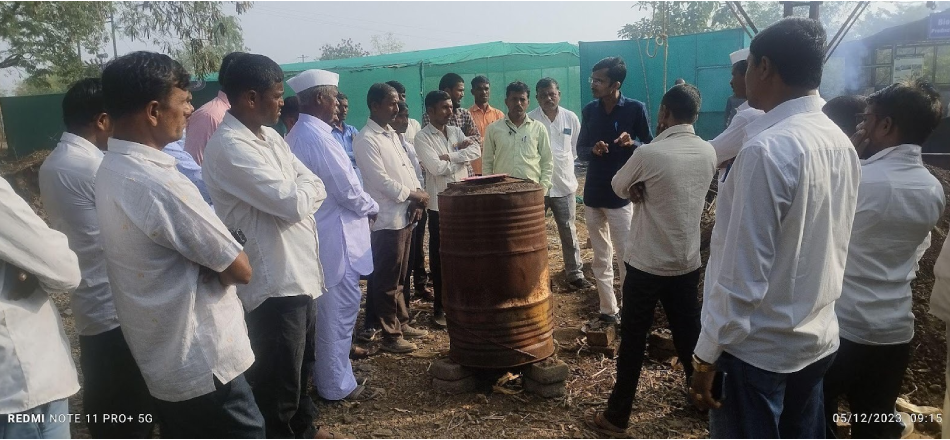
A cost effective method to make biochar where we utilize a 200 litre steel drum with air holes. Biomass is loaded, ignited and left to smoulder in a low-oxygen environment, converting it to biochar. To set up this it requires minimal investment and ideal for on farm replication.
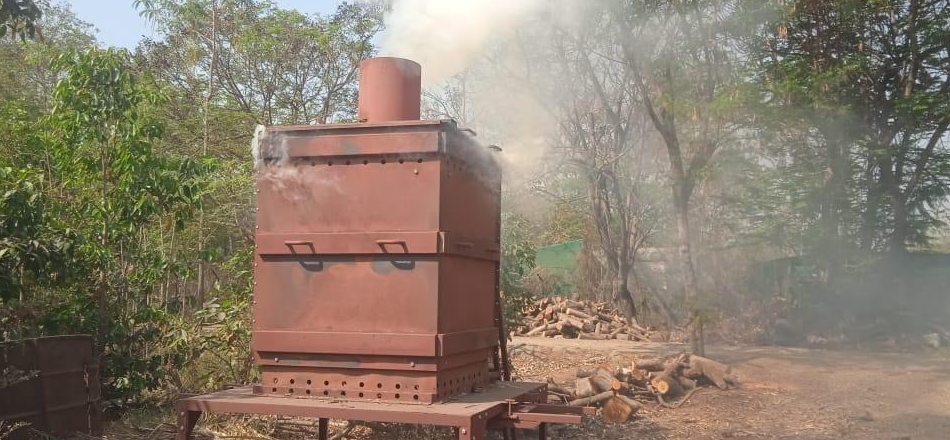
This method needs an engineered iron/steel kiln which optimizes thermal efficiency and precise temperature regulations during pyrolysis. This type of kiln is having the capacity of 200 kg woody biomass and the recovery of Biochar will be around 25 to 30 %.
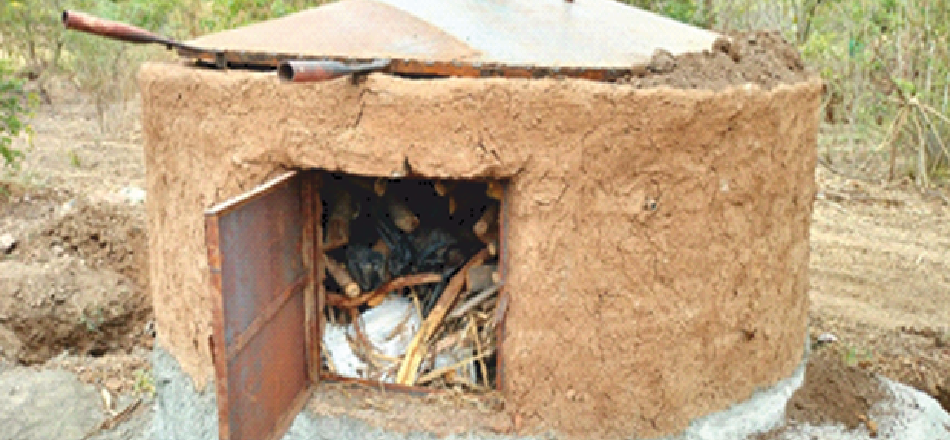
The Traditional mud stove can be adapted for the biochar production with a modification in them to limit oxygen flow which allows organic material to undergo through pyrolysis process.
This method is one of the oldest and simplest methods for biochar production. For this method we have to dig a pit, load it with biomass and burn it with the limited airflow to promote pyrolysis. As it gives inconsistent quality and high emissions.
This is a Traditional method, A pyramid-shaped kiln is built with wood logs and plant roots. Vents are opened top-down to release combustion gases. The heap is covered with a paste of fibrous agricultural waste (e.g., coconut husk, paddy straw) and clay, then sealed with sand and sprinkled with water. Controlled burning lasts 3–4 days, converting logs to charcoal. After several days of cooling, the earth cover is removed, and biochar is separated from carbonized residue.
Under the Nature Positive Solutions Project , the biochar production unit is developed in the CRS- Urulikanchan, This model is developed by the Samuchit which is an easy to operate mobile unit which ensures more efficiency in biochar yield as compared to traditional methods of biochar productions. This Samuchit model is installed with existing units and with training at the CRS-Urulikanchan.
Visit our Vermicompost site which provides a sustainable solution for agri-waste management. Earthworms convert crop residues, livestock manure, and food processing waste into nutrient-rich compost, improving soil health and fertility.
Visit our 10-drum Sahyadri Farms technology unit producing residue-free bio-fertilizers and bio-pesticides using locally available agri-residues – a proven pathway to chemical-free, export-quality crops. We have produced Humic acid, fulvic acid, Deshikalp, Jeevamrut, Lamit Ark, Tobacco Ark, F-Neem, Bacterial slurry, Dashparni Ark, EM Solution etc.